
How to Choose a Sofa: A Practical Buying Guide

The right sofa is the one that fits your room, suits how you actually live, and is built to last. Start with size and proportion, then judge the frame, suspension and cushions, choose between fabric and leather for your lifestyle, and always check it will fit through your doors and stairwell before you buy. This guide walks through each decision the way an interior designer would, so you spend with confidence.
Start with size and proportion
Measure your room before you fall in love with a piece. A sofa should not run the full length of its wall — leaving some clear space at each end keeps the room feeling open rather than crowded. Many designers use roughly two-thirds of the wall as a flexible starting point for the width of the sofa, not a fixed rule, so adjust it to your space. Leave roughly 30 cm of walkway around the seating area and about 45 cm between the sofa and the coffee table so people can pass and reach comfortably.
Think about how many people really need to sit at once and how the sofa relates to the room: a three-seater suits most living rooms, while an L-shaped sectional defines an open-plan space but can overwhelm a small one. Sketch the footprint with painter's tape on the floor to see it at full size before deciding.
Judge the frame, suspension and cushions
Quality you cannot see is what makes a sofa last. The best frames are kiln-dried hardwood joined with dowels, screws and corner blocks — not just staples or glue. Softwood and particleboard frames are cheaper but loosen and creak within a few years.
Under the cushions, eight-way hand-tied or quality sinuous (serpentine) springs give even, durable support. For cushions, high-resilience foam holds its shape longest; a foam core wrapped in down or fibre balances support with a softer feel. Firmer, denser cushions keep their look far longer than soft, low-density fill.
This is exactly where we refuse to compromise: every Sabraoui sofa is built with only the highest-quality components, from the kiln-dried hardwood frame to the high-resilience cushioning, so it holds its shape and comfort for years.
The Sabraoui standard. Every sofa is built with kiln-dried hardwood and high-resilience cushioning, so it keeps its shape and comfort for years.
Fabric or leather?
Both can be excellent — the right choice depends on your household. Fabric offers the widest range of colour and texture, feels warm year-round, and (with a tight weave or a performance finish) resists daily wear well. Leather is hard-wearing, wipes clean in seconds and develops a handsome patina, but costs more and can feel warm in a Lebanese summer.
If you have young children or pets, a tight-weave performance fabric or a wipeable leather will serve you better than a delicate loose weave. For a full comparison, see our guide on choosing between a fabric and a leather sofa.
Make sure it fits through the door
A sofa that will not fit through your entrance is the most expensive mistake in furniture. Before ordering, measure the sofa's width, height and diagonal depth, then measure every doorway, hallway turn, stairwell and lift it must pass through. Remember that delivery teams can often tilt or remove feet, but a one-piece large sofa has limits.
If access is tight, a modular sofa that arrives in sections is the safe choice — it carries in piece by piece and assembles in the room.
Frequently asked questions
How long should a good sofa last?
A well-made sofa with a kiln-dried hardwood frame and high-resilience cushions typically lasts 10 to 15 years or more. Budget sofas with softwood or particleboard frames and low-density foam often start to sag and loosen within 2 to 5 years.
How do I know if a sofa will fit through my door?
Measure the sofa's width, height and diagonal depth, then measure the narrowest point of every doorway, hallway turn, stairwell and lift on the route. Compare the two. If clearance is tight, choose a modular sofa that arrives in separate sections.
What is the most durable sofa fabric?
Tightly woven fabrics and dedicated performance fabrics wear best, because a denser weave resists pilling, snagging and crushing. Loose, textured weaves look beautiful but show wear sooner. For homes with kids or pets, a performance fabric or a wipeable leather is the most forgiving.
Is a sectional or a regular sofa better?
A regular three-seater is more flexible and suits most rooms; a sectional seats more people and anchors an open-plan space but needs room to breathe and can crowd a small one. Tape the footprint on your floor first to check it leaves comfortable walkways.
How firm should sofa cushions be?
Firmer, higher-density cushions hold their shape and support far longer than soft, low-density fill, which flattens quickly. A high-resilience foam core — optionally wrapped in down or fibre for a softer surface — gives the best balance of comfort and longevity.
Shop the collection
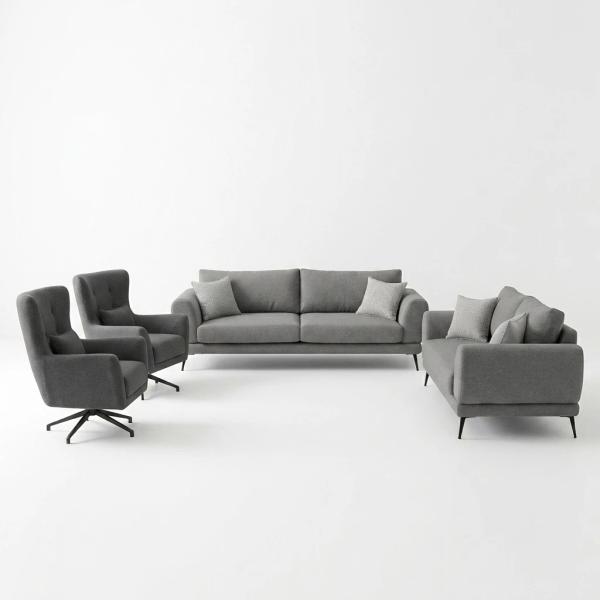
Milano Salon Set
A matched sofa, loveseat, and two swivel armchairs with rolled arms and dark metal legs — one cohesive living room group.
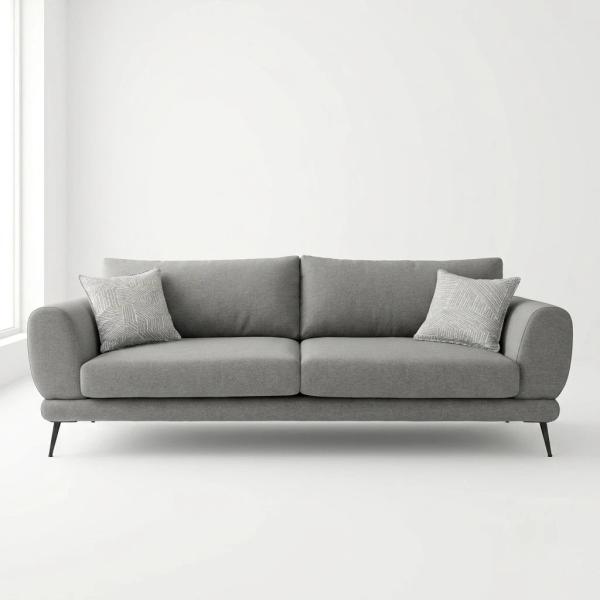
Milano (3seats)
A low, broad sofa with curved arms and slim metal legs — built for a living room that doesn't need to shout.
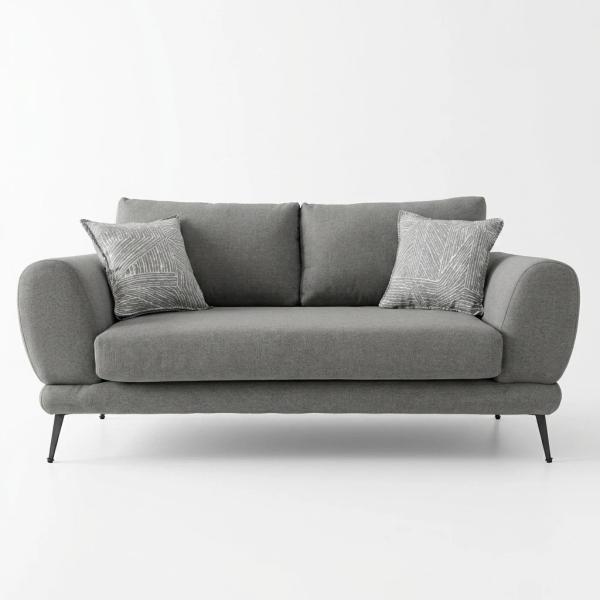
Milano (2seats)
A two-seat sofa with curved arms, a low stance, and angled metal legs that earn their place in any living room.
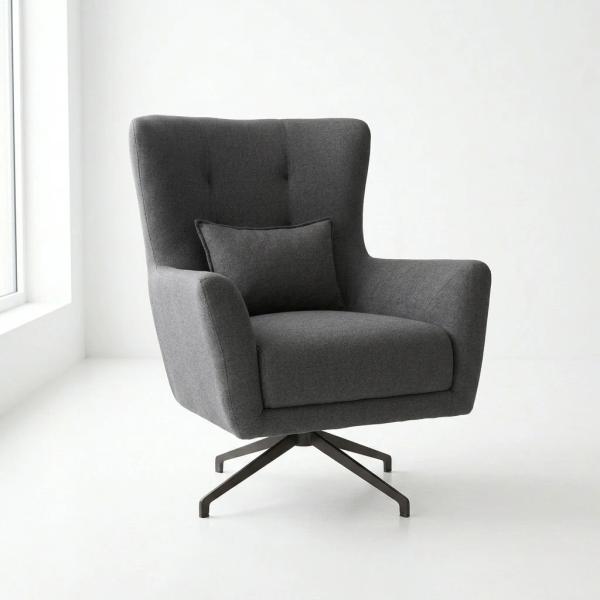
Milano (armchair)
Wingback swivel chair with a tufted back, generous seat, and a four-point metal base.
More guides

How to Choose a Dining Table: Size, Shape & Material
How to choose a dining table: how many it seats, the right shape for your room, how much clearance you need, and which material lasts — a practical guide.

Fabric vs Leather Sofa: Which Should You Buy?
Fabric or leather sofa? Compare comfort, durability, cleaning, pets, cost and how each handles a hot, humid climate — so you choose the right one.

How to Clean a Fabric Sofa (by Fabric Type)
How to clean a fabric sofa safely: routine vacuuming, blotting spills, and the right method for cotton, linen, velvet, microfibre and wool — step by step.